Modern Angular 15: Add to Cart with output()
This is lesson 15 of the Modern Angular Course. In the previous lesson, we used computed() to filter products reactively. Now we add child-to-parent communication so clicking “Add to Cart” in a pro...

This is lesson 15 of the Modern Angular Course. In the previous lesson, we used computed() to filter products reactively. Now we add child-to-parent communication so clicking “Add to Cart” in a pro...

Spring Boot 4 is not a routine version bump. This migration touches platform baselines (Java/Jakarta/Servlet), dependency structure, test infrastructure, and JSON behavior — all at once. If your ...

This is lesson 14 of the Modern Angular Course. In the previous lesson, we introduced a writable signal for the search input. Now we build on that foundation by deriving filtered state with compute...

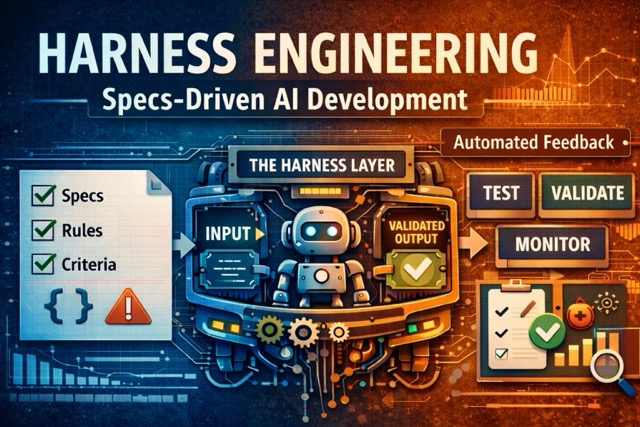
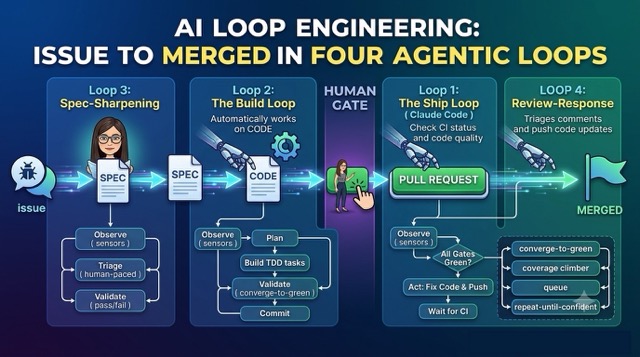
Many teams are still using AI like an intern. We give instructions, review every output, request fixes, and repeat. It works for quick experiments. It does not work as a long-term delivery model. ...

This is lesson 13 of the Modern Angular Course. In the previous lesson, we used @if and @else to conditionally render UI in the product card. Now we turn to user interaction by adding a search inpu...

This is lesson 12 of the Modern Angular Course. In the previous lesson, we passed product data from the parent component to child cards using the modern input() API. Now that each card receives rea...

This is lesson 11 of the Modern Angular Course. In the previous lesson, we rendered a list of products using signals and @for. Each card still shows placeholder content. Now it is time to connect r...

This is lesson 10 of the Modern Angular Course. In the previous lesson, we built the ProductsGrid and ProductCard components with static placeholder content. Now it is time to make the UI reactive ...

This is lesson 9 of the Modern Angular Course. In the previous lesson, we set up Angular Material and created the application header. Now we have a basic app shell, so it is time to build the main ...

This is lesson 8 of the Modern Angular Course. In the previous lessons, we covered Angular fundamentals and the full signals model — writable signals, computed signals, and effects. Now we shift to...

This is lesson 7 of the Modern Angular Course. In the previous lessons, we covered writable signals for state and computed signals for derived values. Now we complete the signals trio by introducin...

This is lesson 6 of the Modern Angular Course. In the previous lesson, we introduced writable signals and used them to manage local component state. Now we build on that foundation with computed si...